
Product / Surge Protection Devices
We delivers protection with precision, regional reach
and technical excellence.
Modern electrical systems – from industrial control panels to data centers and telecom sites – face frequent voltage surges caused by lightning, utility switching, or equipment faults. A surge protection device (SPD) safely diverts these short, high-energy impulses to ground, shielding sensitive equipment. Lightning strikes and power-grid disturbances are among the leading causes of electronic failure.
To ensure comprehensive protection, a Coordinated Surge Protection System is deployed – where SPDs are installed in tiers (IEEE/ANSI “zones”) – at the service entrance (Zone 1) to intercept the largest surges, and downstream at branch panels to protect critical electronics. This coordination ensures energy is managed progressively, with each SPD handling the surge stress it is designed for.
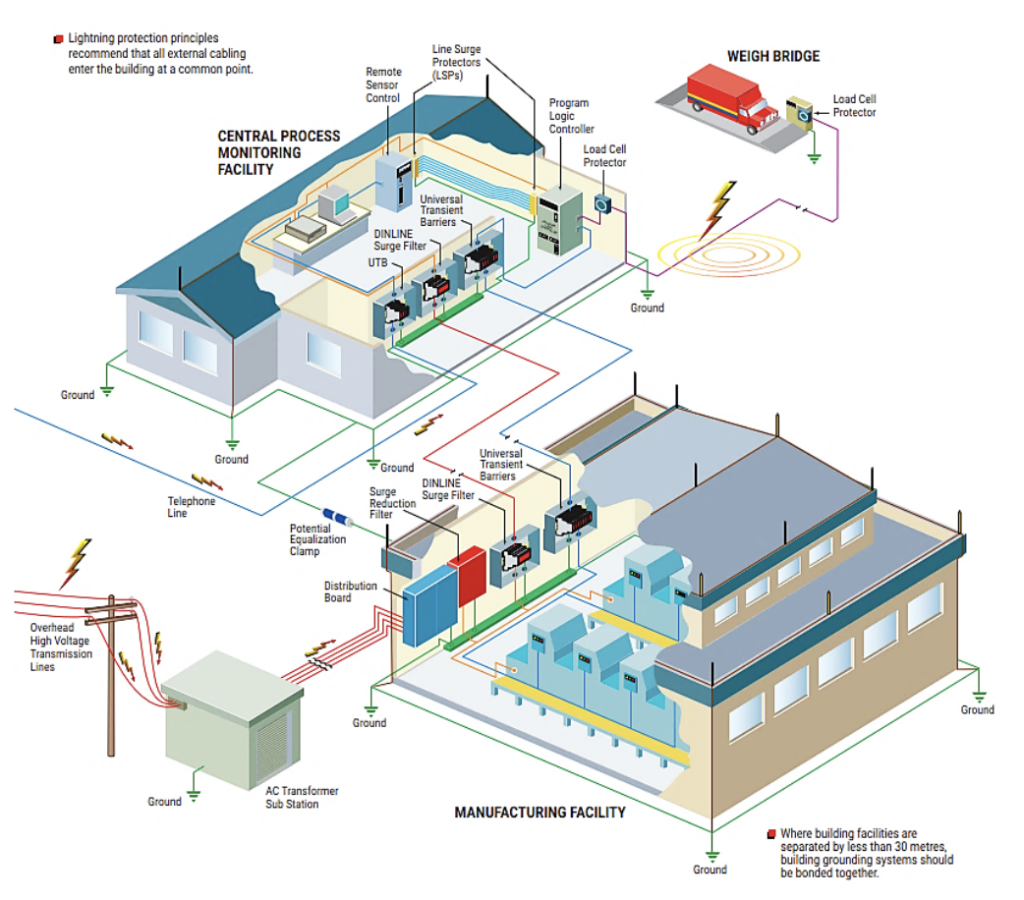
Robust SPDs are essential to prevent equipment damage, data loss and costly downtime in harsh or unstable power environments.
Transient Discriminating (TD) Technology
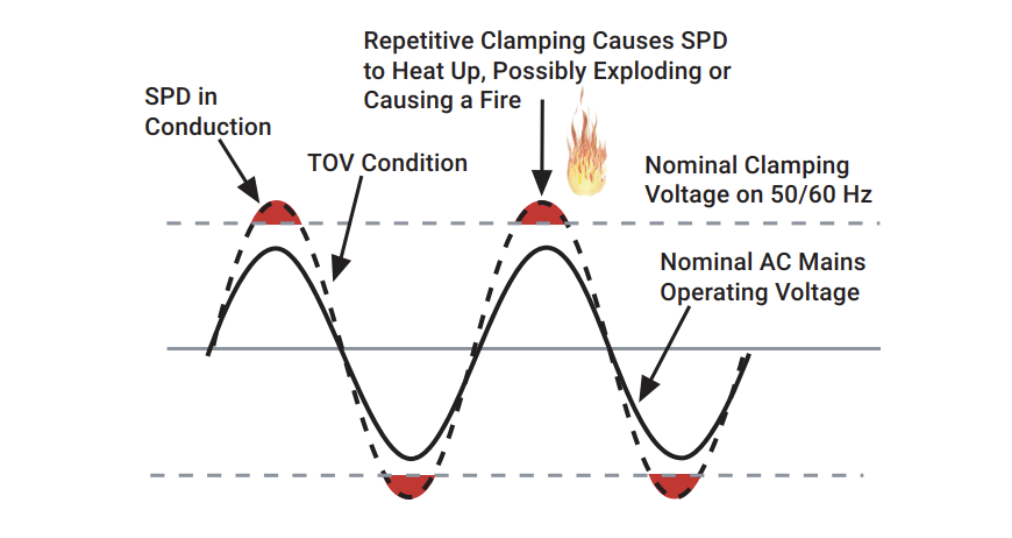
Conventional SPD technologies utilizing metal oxide varistors and/or silicon avalanche diodes to clamp or limit transient events are susceptible to sustained 50/60 Hz mains over-voltage conditions (TOVs) which often occur during faults to the utility system. Such occurrences present a significant safety hazard when the suppression device attempts to clamp the peak of each half cycle on the mains overvoltage. This condition can cause the device to rapidly accumulate heat and in turn fail with the possibility of inducing a fire hazard. The diagram shows how a traditional SPD is chosen to have a nominal clamping voltage that is above the peak of the nominal AC mains voltage.
The secret to ERICO’s Transient Discriminating Technology is its active frequency discrimination circuit. This patented device can discriminate between a temporary over-voltage (TOV) condition and a very fast transient, which is associated with lightning or switching-induced surges. When the transient frequencies are detected, the patented Quick-Switch within TD activates to allow the robust protection to limit the incoming transient.
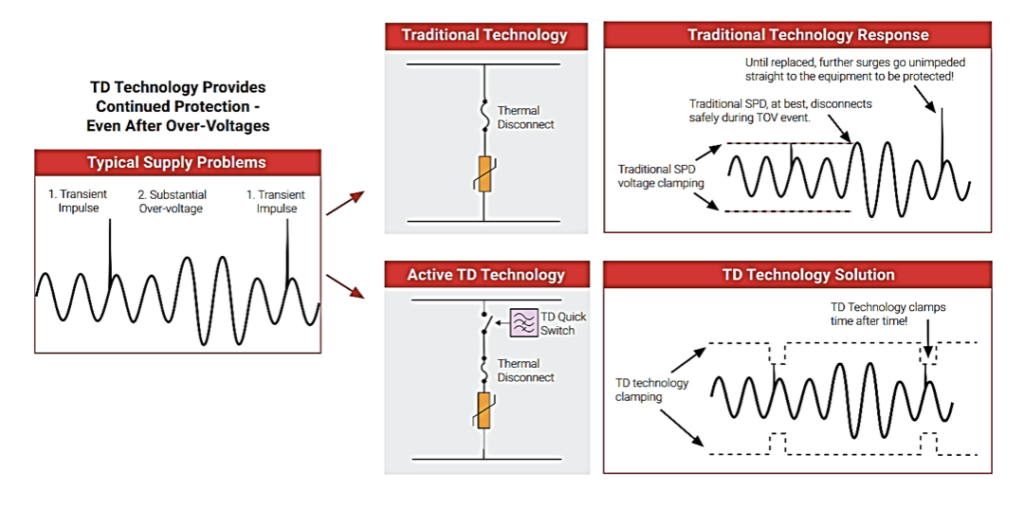
The frequency discriminating circuit that controls the Quick-Switch helps ensure that the SPD device is immune to the effects of a sustained 50 or 60 Hz TOV. This allows the device to keep operating, in order to help provide safe and reliable transient protection, even after an abnormal over-voltage condition has occurred.
ERICO CRITEC DT1, DT2, and EDT2 Series Overview:
nVent ERICO’s CRITEC DT1, DT2, and EDT2 series are compact DIN-rail SPDs designed for demanding applications. All units are thirdparty tested to IEC 6164311 and UL 1449. Key distinctions:
- DT1 Series: Designed for Class I+II (Type 1+2), ideal for service-entrance locations with high 20 kA/mode surge ratings.
- DT2 Series: Class II (Type 2), compact plug-in modules suited for distribution boards and panel protection.
- EDT2 Series: Class II SPD that incorporates TD Technology for superior resilience during overvoltage events.
All models include:
- High surge ratings (20 kA per mode)
- Visual and remote status indication
- Pluggable DIN-rail mounting
- Compliance with IEC/UL standards
Key Technical Features:
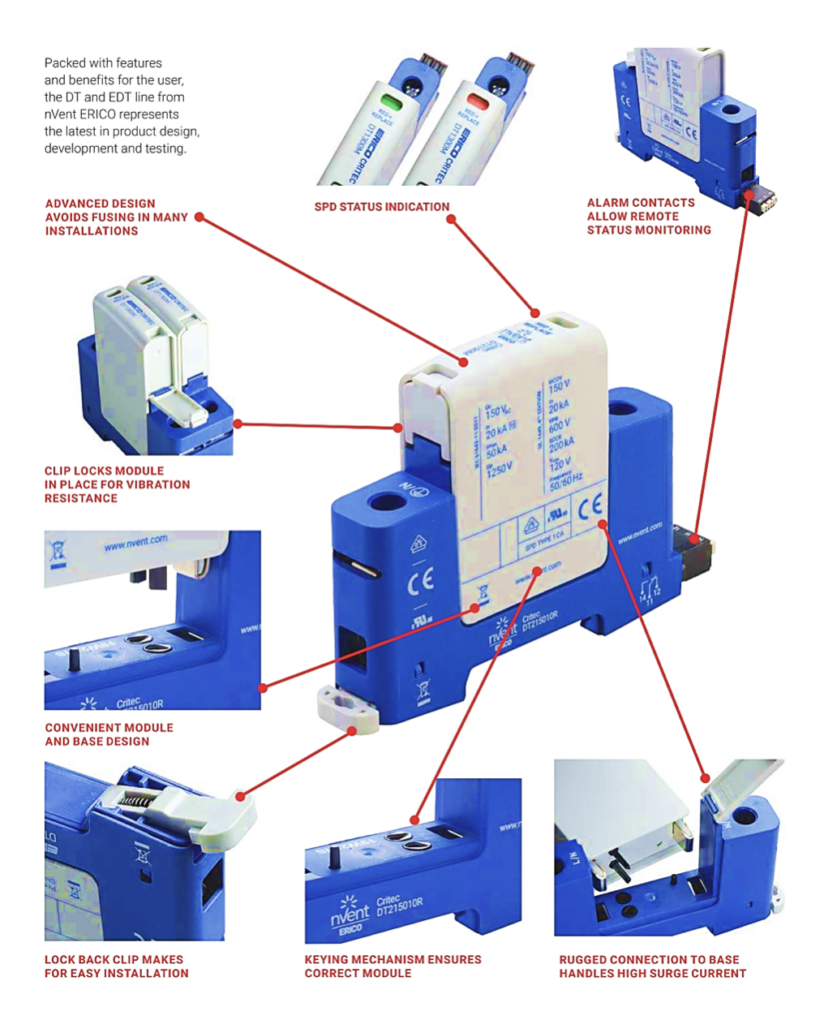
- Modular Design: Compact, pluggable DIN-rail format with vibration-resistant locking.
- High Surge Capacity: Up to 20 kA per mode (8/20 µs).
- Integrated Monitoring: LED flags (Green/Red) with Form C relay contact for remote signaling.
- Fuse-Free Operation: Internal design allows many installations without external fusing.
- Module-Keying System: Prevents incorrect module replacement.
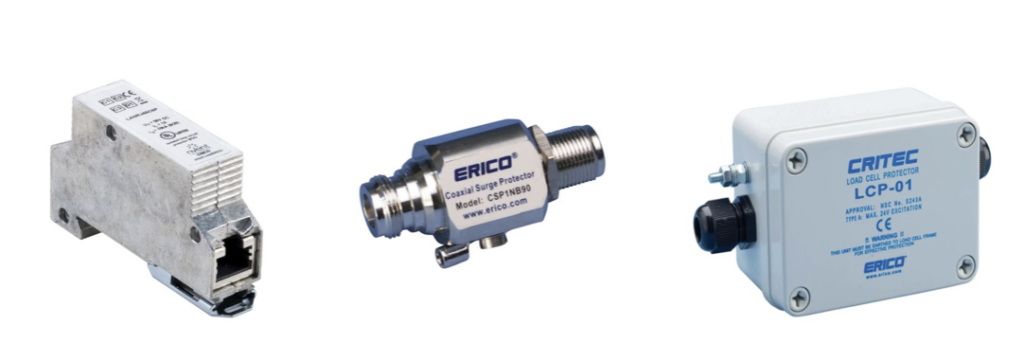
In addition to power line surge protection, data and signal lines also require robust protection against transients. Sensitive electronic systems such as industrial control networks, building management systems, IT infrastructure, and telecommunications rely heavily on uninterrupted data integrity. Surges on data lines – whether from indirect lightning strikes, inductive coupling, or cross-system transients – can lead to equipment malfunction, loss of communication, and irreversible data corruption.
nVent ERICO offers a complete range of data line SPDs compatible with Ethernet, RS-485, 4–20 mA loops, CCTV, and other common protocols. These devices:
- Divert damaging voltages to ground before reaching sensitive inputs
- Offer high-speed clamping with minimal signal degradation
- Integrate easily with control panels and data cabinets
- Complement power SPDs in a coordinated surge protection strategy
Together with power SPDs, data line protectors form a holistic defense ensuring both power and signal continuity in mission-critical environments.
Standards & Certification
All CRITEC SPDs are:
- IEC 61643-11 compliant (Class I+II or II)
- UL 1449 (Type 1CA) listed
- CSA certified for North American markets
The CRITEC DT1, DT2, and EDT2 SPDs provide layered protection from power surges and lightning-induced transients. With the introduction of TD Technology in the EDT2 series, ERICO offers continuous, reliable protection even under abnormal grid conditions. These devices are compact, easy to install, and engineered to deliver long-term protection aligned with global standards.
Looking to enhance your facility’s surge protection strategy? Explore how ERICO SPDs with TD Technology can safeguard your infrastructure and minimize downtime. Contact us for product guidance or design support.