Site Surveys & Technical Consultancy
Our engineers conduct detailed on-site surveys to evaluate all physical, electrical, and environmental factors that affect lightning protection, surge behaviour, and earthing performance

This covers structural geometry mapping, soil resistivity study, metallic path continuity checks, review of existing LPS and earthing systems, and identification of installation constraints or high-risk exposure zones.
Beyond the field visit, the consultancy team carries out engineering analysis focused on standards compliance, protection level selection, surge protection coordination, and earthing system optimisation. The study includes assessment of bonding requirements, fault-current paths, system interoperability, and long-term maintainability so that the final solution forms a coherent protection strategy.
Using measured site data, proven ERICO-based engineering practices, and globally accepted design methodologies, Amkey delivers a site-specific consultancy roadmap rather than a generic report. The outcome is a clear, actionable engineering proposal that enhances safety, improves reliability, and supports continuous operation of your electrical and electronic systems.
Lightning Risk Assessment (IS/IEC 62305-2)
Lightning Risk Assessment, as defined in IS/IEC 62305-2, is used to determine whether a Lightning Protection System (LPS) is required for a specific structure and, if required, to identify the appropriate Lightning Protection Level (LPL I–IV).

The assessment evaluates critical parameters such as the number of thunderstorm days and cloud flash density at the location, the number of people exposed within the structure, nearby environmental features such as hilltops or isolated positions, and the presence of overhead power and data lines. It also considers the purpose of the structure, equipment sensitivity, and the risk of fire or explosion. These factors collectively influence both the probability and the consequences of a lightning event. By comparing the calculated risk with the tolerable risk defined in the standard, we establish whether lightning protection is technically necessary and what level of protection is appropriate.
Lightning protection is not mandatory for all structures; our role is to quantify the real risk and determine whether an LPS is genuinely required. Our philosophy is solution-driven, not sales-driven — we recommend protection only when the risk assessment proves the need, ensuring our clients invest solely in systems that are technically justified and compliant with international engineering standards.
Lightning Protection System (LPS) Design
We provide engineered Lightning Protection System (LPS) designs using a structured, risk-based approach aligned with site conditions, asset criticality, and applicable international standards. Each design is developed from detailed site surveys and lightning risk assessment outcomes, ensuring that the selected protection methodology is technically justified, performance-driven, and site-specific.
Conventional Lightning Protection Design
Conventional Lightning Protection Systems are designed in accordance with IS/IEC 62305 (Part 3). These designs incorporate optimally positioned air terminals, controlled routing of down conductors, compliance with separation distance requirements, and effective bonding arrangements. The objective is to ensure reliable lightning interception and safe dissipation of lightning currents into the earthing system, while accounting for practical installation constraints and potential future site modifications.
Advanced Lightning Protection Design
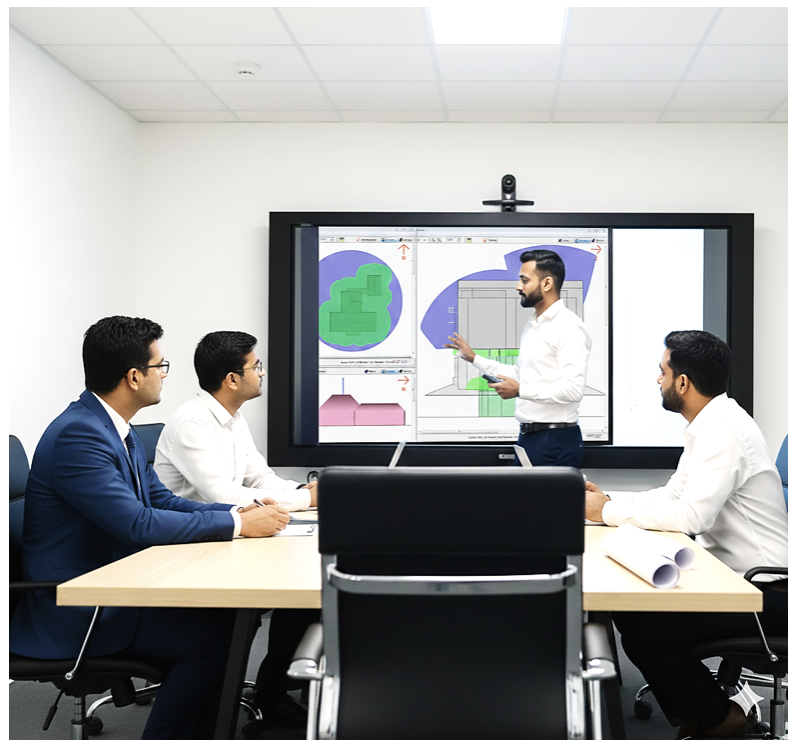
For sites with large footprints, complex geometries, solar installations, or higher lightning exposure, advanced solutions such as CVM- and ESE-based systems are evaluated. These designs are carried out using ERICO’s LPSD software, enabling precise analysis of protection zones, rolling sphere interaction, and lightning attachment probability. The software evaluates not only the structure itself but also the surrounding impact zone influenced by the building, ensuring a scientifically validated protection envelope aligned with global performance standards.
Design Approach
The selection between conventional and advanced lightning protection is entirely engineering-driven, based on site-specific risk, layout complexity, and performance requirements. Each design ensures seamless integration with earthing and equipotential bonding systems, optimised coverage with minimal unprotected zones, and long-term reliability under real lightning conditions. Our focus is to deliver lightning protection designs that are standards-compliant, constructible, and engineered for dependable real-world performance.
Earthing System Design:
A reliable earthing system is fundamental to electrical safety, ensuring that fault currents, lightning energy, and transient surges are safely dissipated into the ground without endangering equipment or personnel. Each design considers system fault levels, soil characteristics, conductor sizing, grid geometry, touch and step voltage criteria, and complete equipotential bonding across all exposed metallic and conductive parts. Soil resistivity is treated as the most critical design parameter, as it ultimately governs the performance and effectiveness of the earthing system. The final solution is tailored to the site’s operational needs, environmental conditions, and applicable industry standards to deliver long-term safety and stable performance.
Soil Resistivity Measurement
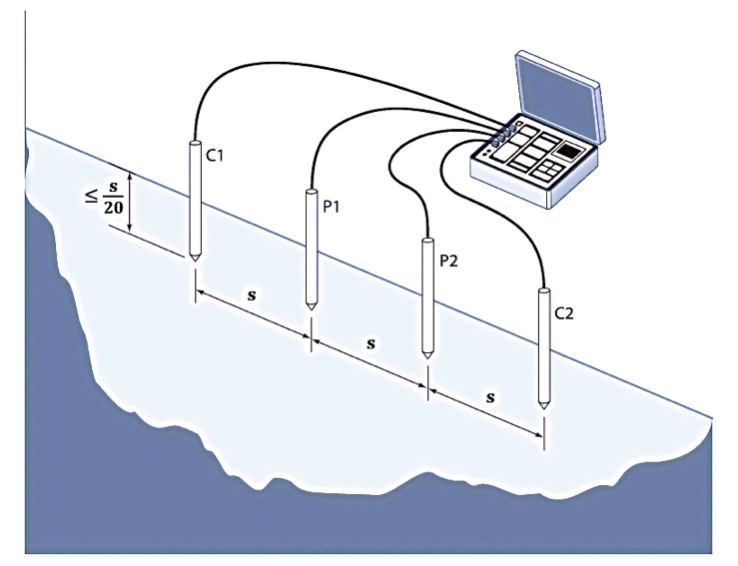
Soil resistivity is a decisive parameter in earthing system design because it determines how effectively lightning and fault currents can disperse into the ground. To accurately characterise the soil, on-site measurements are carried out using the Wenner Four-Point Method in line with IS 3043:2018, supplemented with directional analysis across the site.
In the chosen direction, four electrodes are driven into the soil at equal spacing, and the test is repeated with multiple spacings such as 2 m, 5 m, 10 m, 15 m, 25 m, and 50 m. Smaller spacings measure shallow layers, while larger spacings represent deeper soil behaviour.
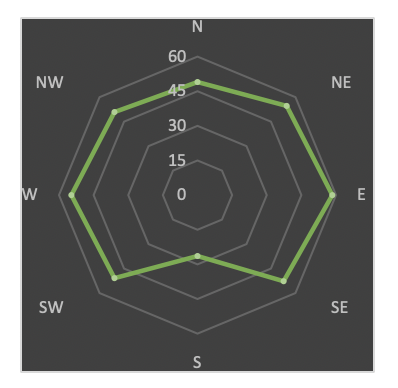
To capture horizontal variations across the site, the test is conducted in at least eight directions around a central reference point. The measured values are plotted to form a polar resistivity curve, and an equivalent circle of equal area is constructed. The radius of this circle represents the average soil resistivity of the site.
This comprehensive resistivity assessment forms the foundation for selecting the right earthing electrode type, installation depth, grid configuration, and bonding strategy—ensuring a low-impedance, high-performance, and long-lasting earthing system.
Earth Resistance Measurement (IS 3043:2018 – Fall-of-Potential Method)
Earth resistance testing is a critical step in validating the performance and safety of any earthing system. As outlined in IS 3043:2018, the Fall-of-Potential (Three-Point) Method is the most dependable and widely accepted field technique for determining whether an electrode provides a stable, low-impedance path for fault and lightning currents.
In this method, two auxiliary electrodes are positioned in a straight line with the electrode under test. A controlled test current is injected into the soil through the outer electrode, and the resulting voltage is measured at the inner electrode. The ratio of these two parameters provides the true earth resistance, free from external interference. For measurement accuracy, the position of the potential electrode is adjusted around the recommended 61.8% point, and stable, repeatable readings confirm a valid test result.
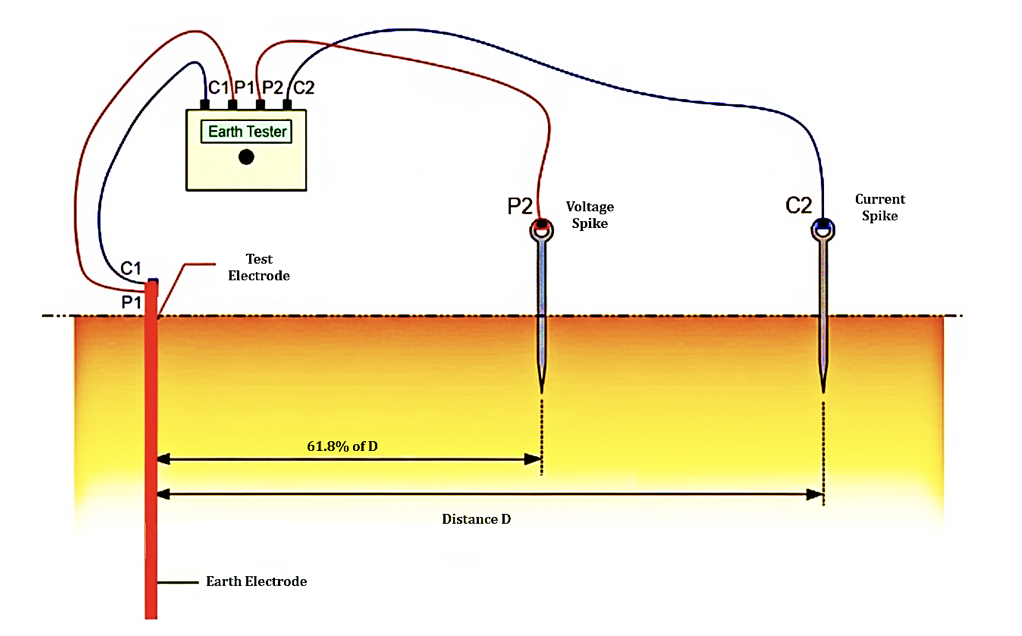
Since soil moisture significantly influences resistivity, IS 3043 recommends conducting earth resistance measurements during dry-season conditions, when the soil is least conductive. This ensures the readings represent the worst-case performance of the earthing system and provide a reliable benchmark for long-term safety and system design.
Installation of Lightning Protection & Earthing Systems
Our installation services combine engineered precision with a standards-led, methodical execution philosophy. Systems are installed by specially trained teams with extensive experience across solar power plants, refineries, industrial campuses, data centres, and multi-structure facilities, where reliability, safety, and compliance are mission-critical. With thousands of installations executed across diverse terrains and soil conditions, every project is delivered to a consistently high technical and operational standard.
All installations follow a methodology-driven process strictly aligned with relevant IS/IEC standards. This includes optimised positioning of air terminals, controlled and low-inductance routing of down conductors, engineered equipotential bonding, and the creation of low-impedance earthing paths tailored to the site’s soil characteristics and lightning risk profile. Critical electrical joints are executed using exothermic welding, achieving molecular-level bonding that ensures permanent conductivity, mechanical integrity, and maintenance-free performance over the system’s entire service life.
Each installation is subjected to rigorous quality assurance checks, including conductor continuity verification, earth resistance measurements, validation of bonding integrity, and comprehensive compliance review against the approved design. Safety is embedded at every stage of execution, with strict adherence to industry-specific protocols for working at heights, near live systems, and within large-scale solar and industrial environments.
By integrating engineered materials, advanced installation practices, and disciplined execution controls, we deliver Lightning Protection and Earthing Systems that are not only compliant, but robust, durable, and optimised for long-term surge performance—ensuring enhanced infrastructure reliability, operational continuity, and safety over decades of service.
Auditing of Lightning Protection & Earthing Systems
With over two decades of dedicated experience, we carry out comprehensive audits of Lightning Protection and Earthing Systems to verify their continued effectiveness, safety, and compliance with industry-specific national and international standards. Our audit methodology is aligned with the applicable standards governing each sector, ensuring that the system is evaluated not merely against generic requirements, but against the actual risk profile and regulatory expectations of the facility.
Our auditing experience spans nuclear power plants, hydroelectric facilities, cement industries, automotive manufacturing units, mining operations, as well as residential and commercial buildings. This cross-industry exposure enables us to accurately interpret standard requirements, identify hidden vulnerabilities, and assess whether the existing system remains adequate under current operating conditions.
Each audit includes verification of air terminal coverage, down-conductor routing, bonding integrity, and earthing performance against the relevant industry standards and original design intent. Structural modifications, process changes, or equipment additions are reviewed to determine whether they have altered lightning exposure or introduced non-compliance. The condition and capacity of earth pits and electrodes are assessed to ensure sustained performance, safety, and regulatory alignment.
Annual Maintenance Contracts (AMC)
Annual Maintenance Contract (AMC) services are designed to ensure that Lightning Protection and Earthing Systems continue to perform reliably throughout their operational life. With over two decades of experience delivering regular AMC across critical facilities, we bring strong field knowledge and long-term performance insight into every maintenance program.
AMC activities include systematic inspection of air terminals, down conductors, bonding connections, strike counters, and earthing components to verify physical integrity, electrical continuity, and compliance with applicable standards. All earthing terminations are checked for condition, tightness, and signs of corrosion, while earth resistance values are measured and trended over time to identify gradual performance degradation before it results in system failure.
Our two decades of accumulated field data provide first-hand insight into real-world system performance under repeated lightning exposure. Several maintained installations have successfully intercepted more than 25 lightning events, validating the effectiveness of proper design, installation, and sustained maintenance. This data-driven, predictive maintenance approach ensures sustained protection, regulatory compliance, and long-term safety of the facility.